🦞 Memory Closes the Loop
Plus: Anthropic Bans Peter’s Account, AI Solar Deals on Autopilot

Good Morning, OpenClaw Owners!
We just experienced the most frantic week of OpenClaw updates, and the community has finally completed the closed loop of OpenClaw's memory system.
Memory Closes the Loop
TL;DR: OpenClaw 4.7 → 4.11 turns memory into a full loop — from capture (infer, multimodal inputs), to structuring (memory-wiki + Dreaming), to automatic retrieval (Active Memory), and finally portability (ChatGPT import + UI surfaces).
- 4.7: infer + memory-wiki → unified inference + structured knowledge layer
- 4.8: cleanup release → stabilized channels and runtime
- 4.9: Dreaming upgrade → REM backfill + timeline UI + stronger memory pipeline
- 4.10: Active Memory → automatic context retrieval + local voice + Codex integration
- 4.11: ChatGPT import + UI → memory becomes portable and visible across interfaces
Active Memory + memory-wiki + Dreaming basically closes the loop. But you still need to explicitly enable and use these features through conversation for them to actually kick in.
Sign up on MyClaw to try the new memory loop with OpenClaw 4.11.🚀
Anthropic Bans Peter’s Account
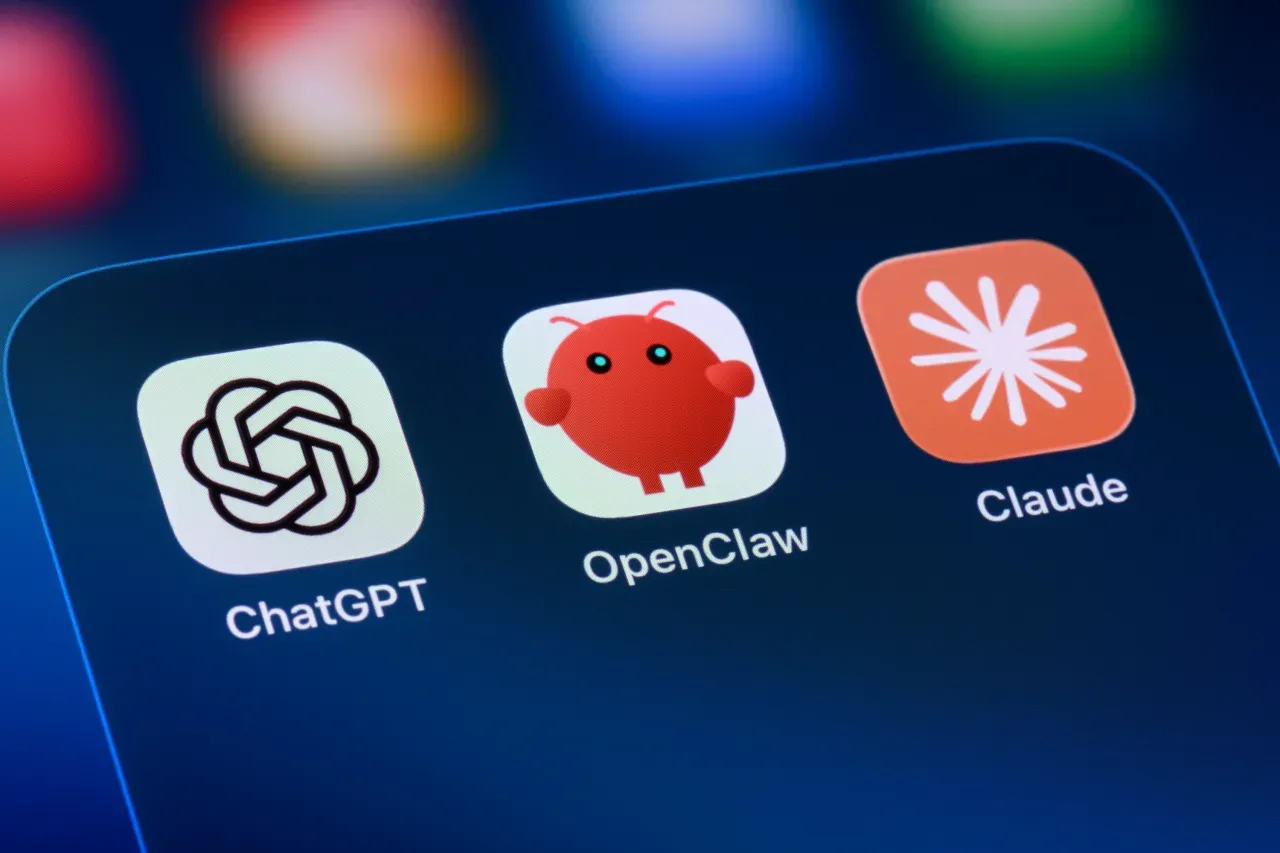
TL;DR: Peter Steinberger said his Anthropic account was briefly suspended for “suspicious activity” while testing OpenClaw compatibility with Claude. The ban was reversed within hours after backlash. It followed Anthropic removing subscription support for third-party harnesses and forcing API usage, escalating tensions over pricing, control, and open-source access.
AI Solar Deals on Autopilot
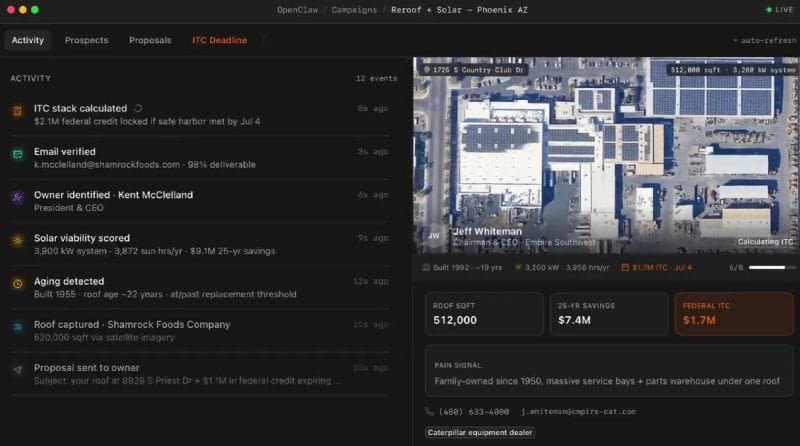
TL;DR: A viral post claims an OpenClaw-powered system can autonomously find warehouses with aging roofs, analyze them via satellite and APIs, calculate solar incentives, generate visual proposals, and contact real owners to book sales calls. The pitch suggests fully automated deal generation, though replies question feasibility, accuracy, and whether it’s just repackaging existing prospecting tools.
Fixing “Lazy GPT” Agents
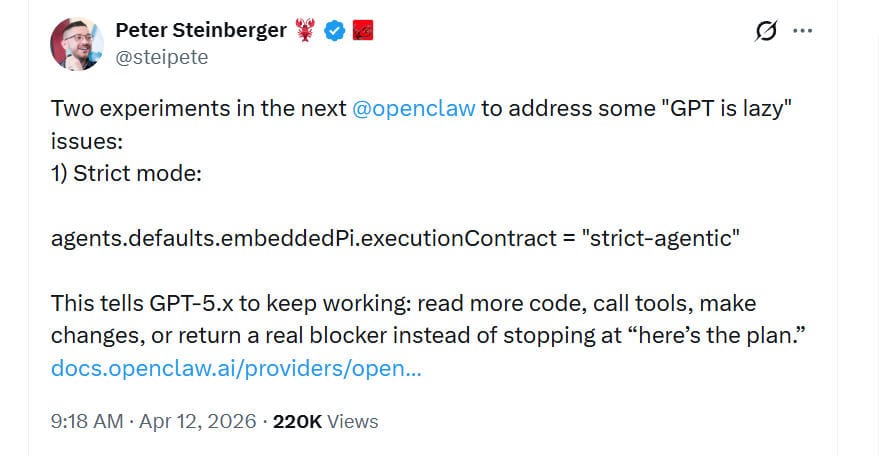
TL;DR: Peter Steinberger shared two upcoming OpenClaw experiments to address "ChatGPT is lazy" in OpenClaw: a strict execution mode that forces continued action until completion or real blockers, and a Codex-based harness that takes over execution flow. Harnesses are now pluggable, enabling comparisons across model runtimes, while broader testing is underway before making these defaults.
GPT-5.4 Hits Sweet Spot
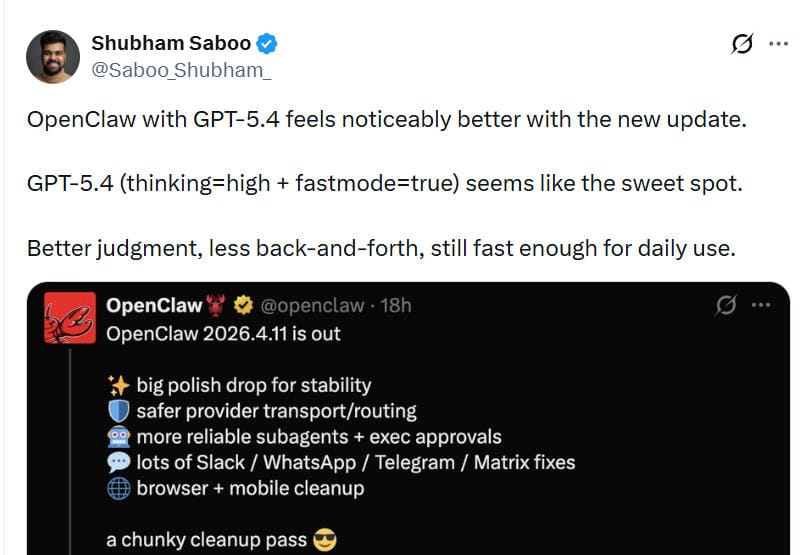
TL;DR: Following the OpenClaw 2026.4.11 update, users report GPT-5.4 showing clear improvements in agent performance, especially with high reasoning and fast mode enabled. The model delivers stronger judgment, reduces unnecessary back-and-forth, and remains fast enough for daily workflows.
Fixing Telegram Chaos
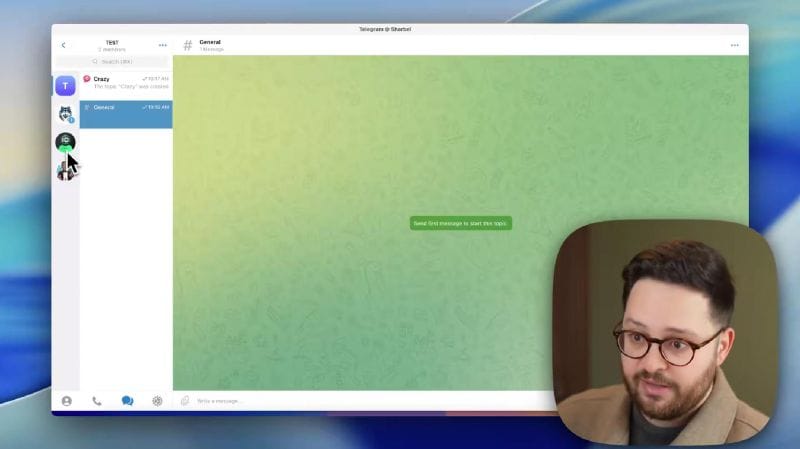
TL;DR: A tutorial shows that running OpenClaw in a single Telegram chat causes context overload as unrelated tasks pile into one thread, breaking performance. Using Telegram topics instead separates workflows like trading or content into distinct lanes, keeping context clean. It mirrors OpenClaw’s context isolation approach and offers a simpler alternative to multi-agent setups for everyday organization.
AI Pool Sales Machine
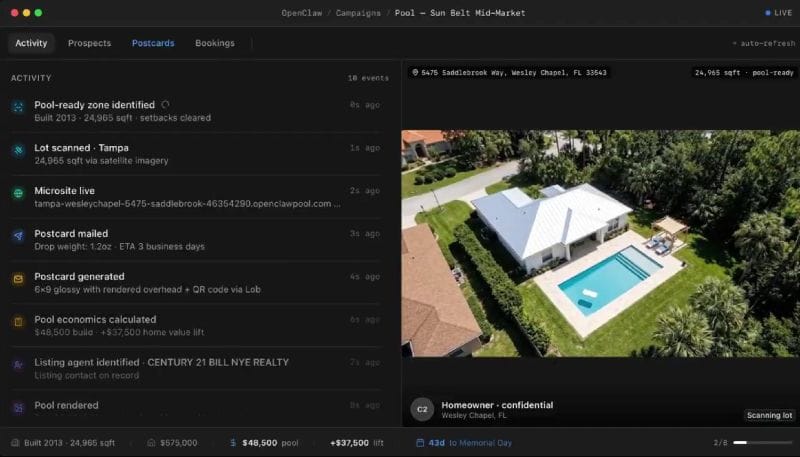
TL;DR: A viral post claims an OpenClaw-driven system can automatically identify homes without pools, generate personalized backyard pool renders, calculate costs and value uplift, and send targeted postcards with follow-up ads to homeowners. The workflow promises end-to-end automated lead generation and sales, though reactions question whether it’s truly novel or just repackaged marketing automation.
Run OpenClaw on MyClaw.ai - No setup, No tech skills, Always-on 👇