Who’s the King of Open-Source AI Agents?
OpenClaw vs Hermes Agent vs DeepSeek Harness
The open-source AI agent race is getting crowded - DeepSeek Harness. OpenClaw. Hermes Agent.
All three are trying to answer the same question:
What should an AI agent actually be?
But they’re taking very different paths.
- DeepSeek is building the architecture.
- OpenClaw is building the always-on agent.
- Hermes is building the autonomous worker.
So which one deserves the crown?
Let’s break it down.
Three Agents. Three Philosophies.
The easiest way to understand the difference is to look at what each project is trying to optimize for.
OpenClaw is focused on identity. Its vision is an agent that persists across your devices, tools, and conversations, remembers what matters, and stays available instead of disappearing when the session ends.
DeepSeek Harness is focused on architecture. It gives developers the building blocks to construct and customize sophisticated agent systems, putting the machinery behind the agent front and center.
Hermes Agent is focused on execution. It treats the agent less like a chatbot waiting for instructions and more like an autonomous worker that can take a goal, use tools, manage tasks, and keep working toward an outcome.
Put simply:
DeepSeek gives you the machine. OpenClaw gives it an identity. Hermes gives it a job.
And that distinction matters, because the future of agents may not be about building a smarter chatbot. It may be about building something that can think, remember, act, and keep working without you.
OpenClaw: Make the Agent Always There
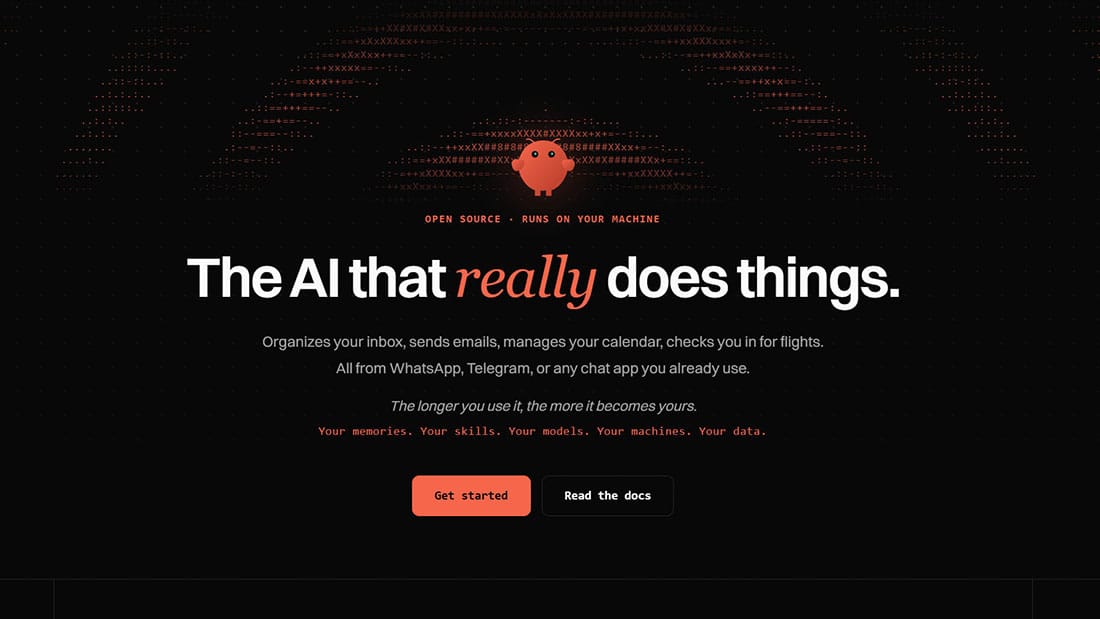
OpenClaw takes a fundamentally different approach. Instead of treating an AI agent as something that only exists inside a terminal, browser, or chat window, it aims to make the agent a persistent presence across the places where you actually work and communicate.
Whether you're using it from your desktop, phone, Telegram, Discord, Slack, or other connected tools, the idea is that your agent shouldn't disappear when a session ends. It can retain context, remember previous interactions, access the tools you give it, respond through the channels you already use, and run scheduled tasks even when you're not actively interacting with it.
That makes OpenClaw less about building the most sophisticated agent framework and more about answering a different question: What happens when an AI agent has a persistent identity, memory, and a place to operate?
You're no longer simply asking an AI to complete a task.
You're giving it a digital home.
And once an agent can remember what happened yesterday, access your tools, communicate through your preferred channels, maintain state, and continue working on scheduled tasks, it starts to feel less like software that you occasionally use and more like a digital worker that's always there when you need it.
That's the bet OpenClaw is making: not just a smarter AI, but an agent that stays with you, remembers for you, and keeps working for you.
DeepSeek Harness: Build the Machine
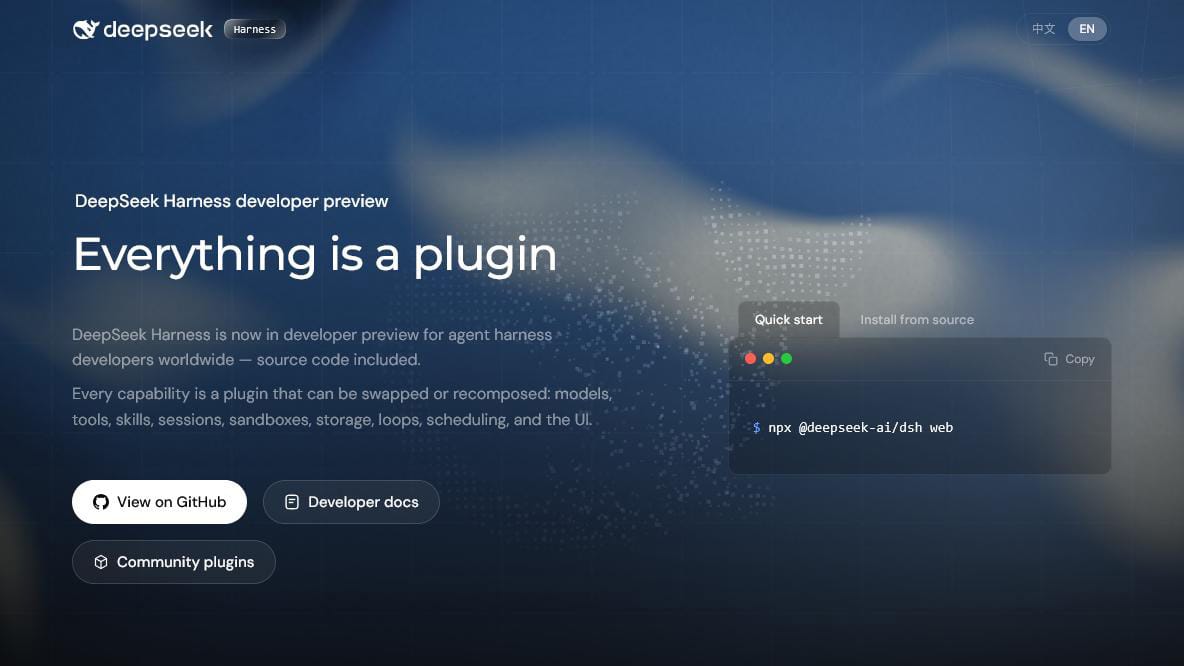
DeepSeek Harness takes the most infrastructure-oriented approach.
Instead of treating an agent as a chatbot with tools attached, it focuses on the underlying architecture: how agents reason, use tools, manage context, execute workflows, and coordinate complex tasks.
That makes it particularly interesting for developers who want to build their own agent systems rather than simply use one.
The philosophy is essentially:
Don't just use an agent. Build the machinery behind it.
It's powerful.
But there's a tradeoff.
The more control you want, the more infrastructure you usually have to manage.
Hermes Agent: Give the Agent a Job
Hermes Agent takes the idea of autonomy even further by treating the agent less like an interface you interact with and more like a worker that can be given an objective and trusted to figure out how to accomplish it.
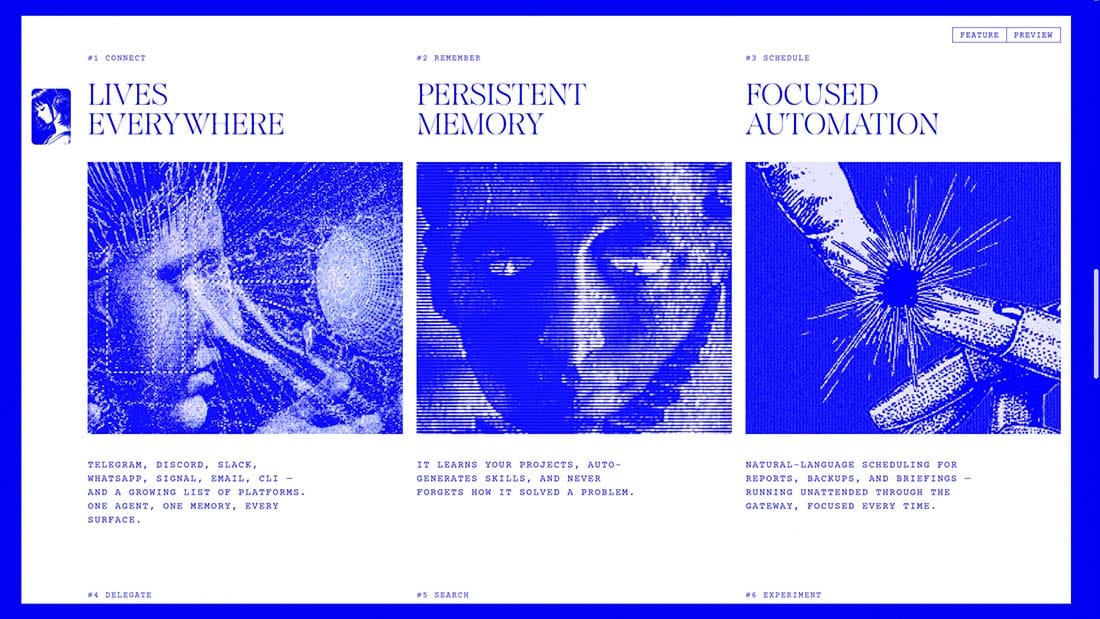
Instead of requiring you to break a complex goal into a series of small prompts, Hermes is designed around the idea that an agent should be able to plan, execute, use tools, manage tasks, delegate work, learn from previous attempts, and continue operating toward an outcome.
That distinction becomes especially important when the task doesn't fit neatly into a single conversation. Researching a topic, writing and testing code, monitoring information, running recurring workflows, or coordinating several subtasks all require an agent to maintain context and make decisions along the way rather than simply generate the next response.
This is what makes Hermes feel less like a chatbot and more like an autonomous operator.
If OpenClaw is trying to become your persistent AI identity, Hermes is trying to become your autonomous worker.
The question is no longer whether an AI can answer your request. The more interesting question is whether you can give it a goal, walk away, and come back to find the work already done.
What Actually Makes an Agent Runtime Win?
The competition between agent runtimes ultimately isn't about who has the longest feature list. A serious agent runtime needs to solve a much harder problem: how to make an AI system capable of operating continuously and reliably outside the boundaries of a single conversation.
That starts with persistence, because an agent needs to remember context, previous work, preferences, and state rather than starting from zero every time you interact with it.
It requires agency, because a useful agent must be able to make decisions and take actions instead of waiting for a human to provide the next instruction.
It needs connectivity, because real work happens across files, applications, APIs, communication platforms, browsers, and other tools that the agent must be able to access.
And perhaps most importantly, it needs reliability, because an agent that only works while you're actively watching it is still closer to a copilot than an autonomous system.
This is where the three approaches begin to diverge.
DeepSeek Harness is focused on building the machinery. OpenClaw is focused on giving the agent a persistent identity. Hermes is focused on giving the agent the ability to execute toward a goal.
All three are pushing the definition of an AI agent forward, but they are optimizing for different versions of what that future looks like.
So, Who's the King?
There isn't a universal winner, because the answer depends on what you expect an agent to be.
If you're an engineer who wants to build and customize the underlying architecture of an agent system, DeepSeek Harness is one of the most interesting approaches because it puts the runtime itself at the center of the experience.
If your priority is autonomous execution and you want an agent that can take a complex objective, use tools, manage subtasks, and continue working toward an outcome, Hermes Agent is an increasingly compelling choice.
But if you believe the future of AI agents is a persistent digital worker that has an identity, remembers your context, connects to the tools and channels you already use, and remains available whether or not you're sitting in front of your computer, OpenClaw has the strongest claim to the crown.
Because the winning agent may not ultimately be the one with the most features or the most impressive benchmark.
It may be the one you stop thinking about.
The one that remembers what happened yesterday, knows what needs to happen today, and can keep working even after you close your laptop.
That's the real race: turning AI from something you use into something that works for you.
And in that race, the most important advantage may not be intelligence alone.
It may be persistence.
Running an Agent Is Still Hard
There is, however, a major problem that tends to disappear from the demos: running an agent is much harder than building one.
Getting an agent to work once is relatively straightforward. Keeping it available 24/7, maintaining its environment, connecting model providers, managing credentials, preserving persistent state, handling updates, monitoring failures, and keeping the entire system secure is an entirely different problem.
For developers, that means spending time on servers, dependencies, API keys, storage, networking, security, monitoring, backups, and DevOps instead of actually using the agent.
And for everyone else, it creates a frustrating gap between "I want an AI agent" and "I actually have an AI agent running for me."
The frameworks determine how the agent thinks and acts.
Infrastructure determines whether the agent is actually there when you need it.
Meet MyClaw
That's the problem MyClaw is built to solve.
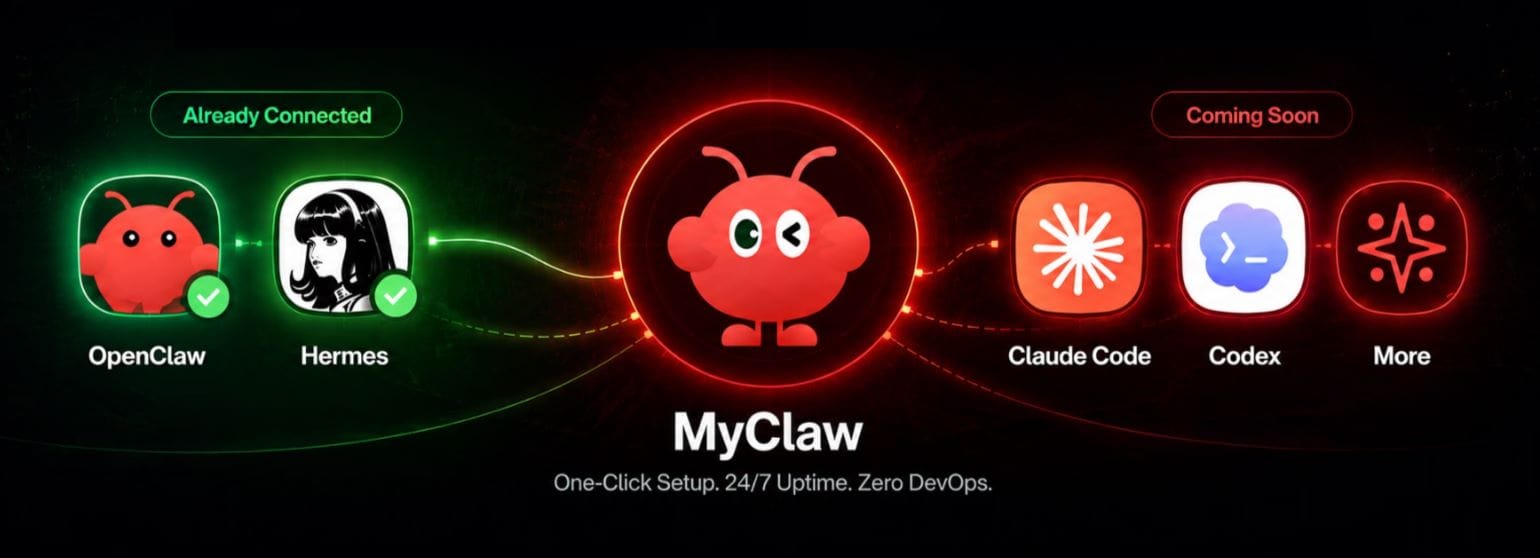
Instead of spending hours setting up servers, managing dependencies, configuring model APIs, maintaining credentials, and worrying about uptime, MyClaw gives you a ready-to-run environment for deploying and operating production-grade AI agents.
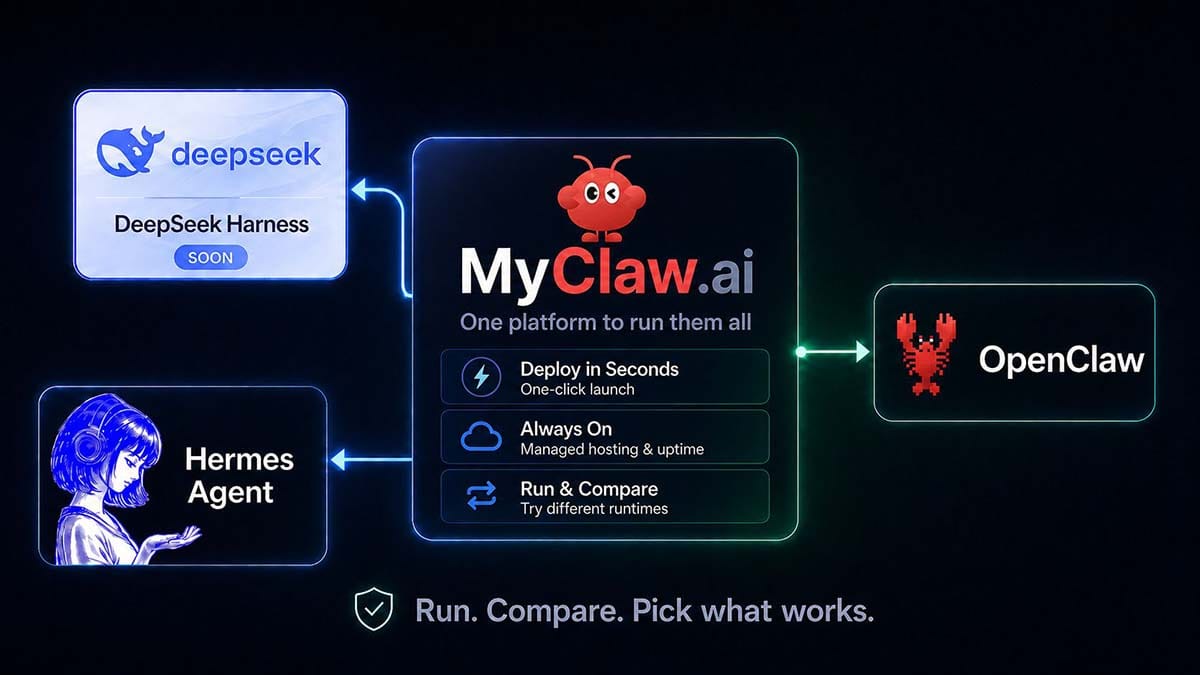
You can run OpenClaw, Hermes, and multiple leading AI models from one place, without turning agent deployment into another DevOps project.
The goal is simple: make the infrastructure disappear so you can focus on what the agent actually does.
One-click setup. 24/7 uptime. Zero DevOps.
Because the next phase of the agent race isn't just about building smarter models or more capable runtimes.
It's about making those agents always available, always connected, and actually useful in the real world.
The question is no longer:
"What can AI do?"
It's:
"What can AI do when you let it keep working?"
And that's where the real agent revolution begins.
MyClaw is a best-in-class AI agent platform that brings together OpenClaw, Hermes Agent, and production-grade infrastructure to help businesses launch intelligent agents that understand goals, use tools, automate workflows, and deliver finished results.
MyClaw already hosts OpenClaw and Hermes, connecting models from every major AI provider, including the latest text, reasoning, and image generation models from OpenAI, Anthropic, DeepSeek, Kimi, GLM, Google Gemini, and more through MyClaw's model gateway.
No lock-in. No juggling API keys. No switching between platforms. Pick the best model for the job, give your agent the tools it needs, and let it run.
Run Best-in-Class AI Agents on MyClaw.ai — In Seconds, Always On 👇