🦞 Peter Pushes Memory Problem Back to Community

Good Morning, OpenClaw Owners!
What used to be prompts is becoming infrastructure.
UPDATE
OpenClaw 4.1 Just Dropped
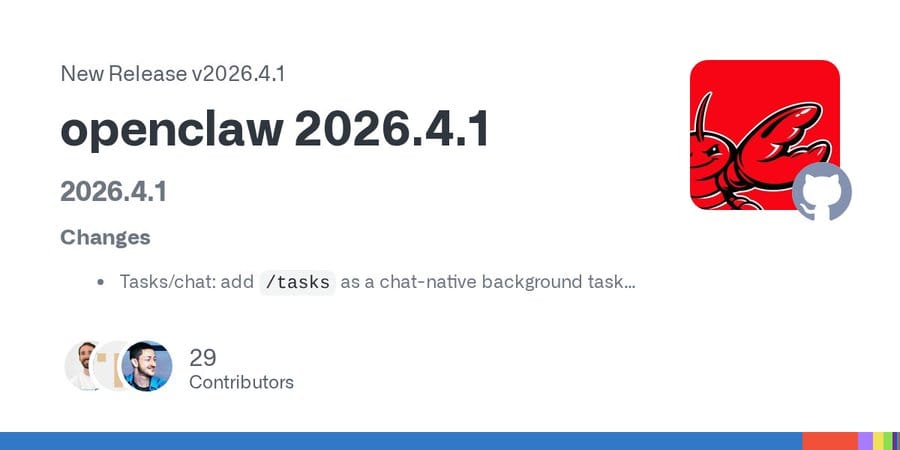
👀 What's happening: OpenClaw just dropped v2026.4.1 with a clear shift toward “agent OS” behavior, not just chat. The biggest change is /tasks — a chat-native background task board that lets agents run and track work asynchronously inside a session. You now see recent task states, failures, and progress without leaving chat, effectively turning OpenClaw into a lightweight task orchestrator.
On the infra side, agent reliability gets a serious upgrade. A new failover system caps retries on the same provider and automatically switches models across providers when rate limits hit. Combined with global agents.defaults.params and improved error classification, agents now degrade gracefully instead of breaking mid-run.
There’s also a quiet but important expansion of the ecosystem: built-in SearXNG web search, Bedrock Guardrails support, Feishu document comment workflows, and new models like GLM-5.1 added to the provider catalog. Plus dozens of fixes around task stability, gateway hangs, and exec approvals — all targeting long-running agent reliability.
🌍 How this hits reality: This turns OpenClaw from “run one task at a time” into “manage ongoing work.” You can now kick off background jobs, switch models mid-session without breaking flow, and rely on automatic fallback when APIs fail. For anyone running multi-step agents or production workflows, this removes a huge amount of babysitting and manual retries.
🦞 MyClaw Thought: This release quietly confirms where OpenClaw is going. Not smarter answers, but persistent work systems. /tasks is the first real step toward agent-native workflows, and failover makes multi-model routing mandatory, not optional.
COMMUNITY
Peter Pushes Memory Problem Back to Community
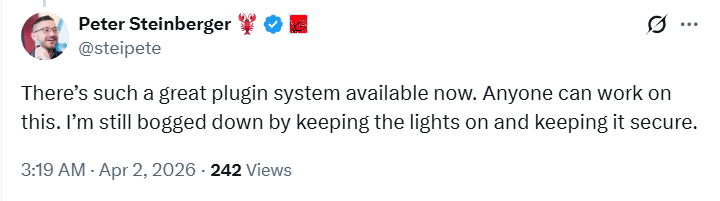
👀 What's happening: After OpenClaw 2026.4.1 rolled out upgrades and fixes, users again hit memory bloat and context loss issues. Peter Steinberger responded bluntly that he will not fix memory in core. His position is clear: the plugin system is ready, and the community should solve it instead.
🌍 How this hits reality: This is a deliberate refusal to centralize product responsibility. Memory is one of the hardest and most critical layers in agent systems, directly affecting reliability and cost. By pushing it outward, OpenClaw avoids bottlenecks but also guarantees fragmentation, where every deployment ends up reinventing core behavior.
🦞 MyClaw Thought: Peter is protecting velocity and control of the core system, even at the cost of user consistency. This moves OpenClaw closer to an operating system model, where power comes from extensions, not built-in completeness.
CASES
A Tea Shop Runs 9 Workflows on One Agent
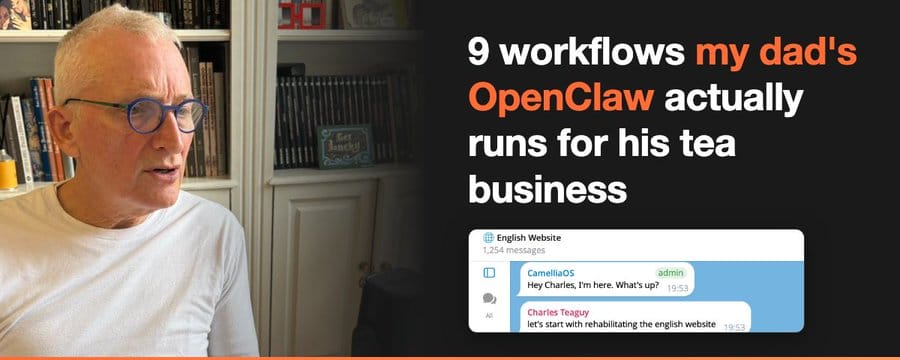
👀 What's happening: A developer spent two months training an OpenClaw agent for his father's tea business. It now handles nine daily workflows — supplier ordering, store order printing, multilingual website updates, shipment tracking, post-order follow-ups, payroll and bonus calculations, timesheet auditing, link verification, and import document handling. He didn't install a skill and walk away. He trained it like a new hire: correcting mistakes week after week until the agent internalized how the business actually runs.
🌍 How this hits reality: Tasks that took 60 minutes now finish in under one. The owner doesn't think about prompts or AI strategy — he opens the shop, the agent runs the back office, and the tea gets sold. What's striking is where this is happening: not a VC-backed startup, but a messy real-world SMB with fragmented systems, multilingual data, and vendors who only take orders over WeChat. The constraint isn't tools anymore. It's whether you're willing to put in the training time.
🦞 MyClaw Thought: Agent adoption won't look like flipping a switch. It'll look like a patient owner spending weeks teaching an AI how his business actually works — the same way you'd onboard a new employee who's never seen your industry before. The difference is this employee gets better every single day and never forgets what you taught it. The businesses that start training now will build compounding leverage that's almost impossible to catch later.
SKILLS
OpenClaw Finally Works Without Setup
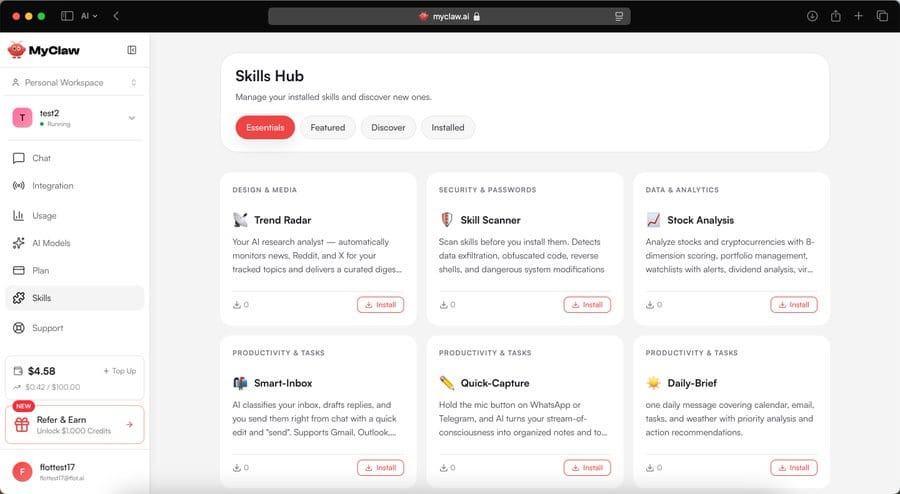
👀 What's happening: MyClaw introduced “Essential Skills,” turning OpenClaw into a one-click agent system with zero setup. Users select a use case, add preferences, and deploy instantly. This builds on OpenClaw 3.24’s 13,700+ skills, where most users previously stalled after install due to complexity.
🌍 How this hits reality: The friction is gone, but so is the filter. A large portion of skills in the ecosystem are unverified, unstable, or poorly maintained. One-click installation now means users can unknowingly deploy broken workflows that crash agents or leak resources. The bottleneck shifts from setup to trust, reliability, and curation at scale.
🦞 MyClaw Thought: Lowering the barrier accelerates adoption, but also surfaces systemic fragility. The next layer of competition is not more skills, but which platform can guarantee that what installs actually works.
Run OpenClaw on MyClaw.ai - No setup, No tech skills, Always-on 👇