🦞 OpenClaw Stability Alert

Good Morning, OpenClaw Owners!
Everything is breaking into agents. However, OpenClaw 3.22 was crushed.
OpenClaw Stability Alert
TL;DR: MyClaw Internal testing found OpenClaw versions 3.22 and 3.23 are highly unstable, with frequent crashes and reliability issues. Some users who upgraded independently have already experienced system failures. We advise all users to avoid upgrading for now. A new version will only be rolled out once we confirm stability and safe for all users. Thanks for your patience.
3.22 Release Slip Triggers Crash
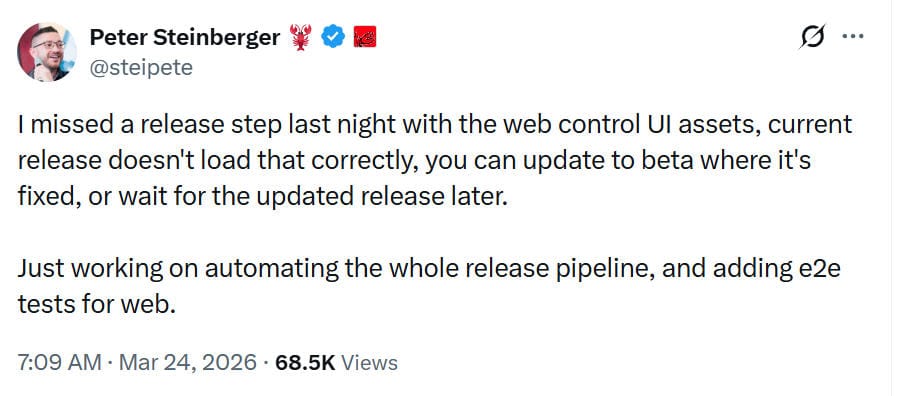
TL;DR: Peter Steinberger revealed he missed a release step involving web control UI assets, causing the latest OpenClaw version to fail loading key components. The oversight led to widespread instability and crashes for users.
OpenClaw Skills Wild West
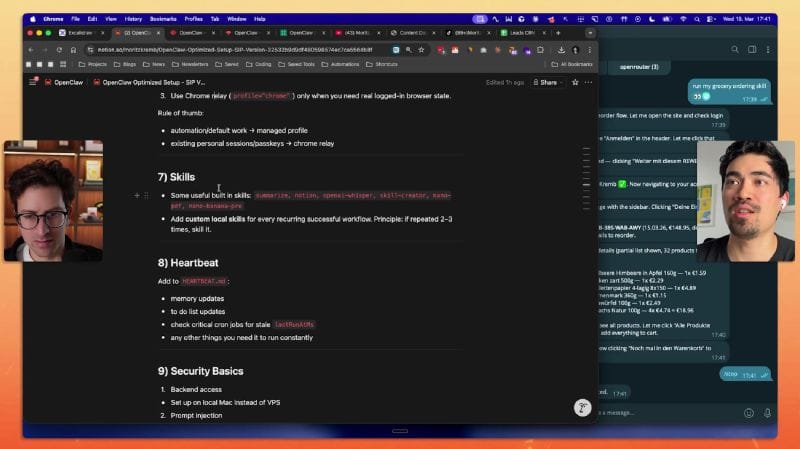
TL;DR: The Startup Ideas Podcast warned that while OpenClaw’s built-in and custom skills are powerful and generally safe, its marketplace remains largely unregulated. Community analysis found some top-listed skills contained hidden malicious instructions, urging users to verify before installing. This risk is why MyClaw launched a curated Skillhub with security-reviewed skills to ensure safer usage.
OpenClaw $12K Cost Lessons

TL;DR: A developer shared a detailed postmortem of running a 24/7 AI “company” on OpenClaw for 30 days, where usage reached $12,229 but was optimized down to $50. The story centers on costly failures—like an agent burning $3,469 overnight due to browser issues—and the hard-earned fixes around automation, memory cleanup, task structuring, and agent design.
Perfect OpenClaw Setup Guide
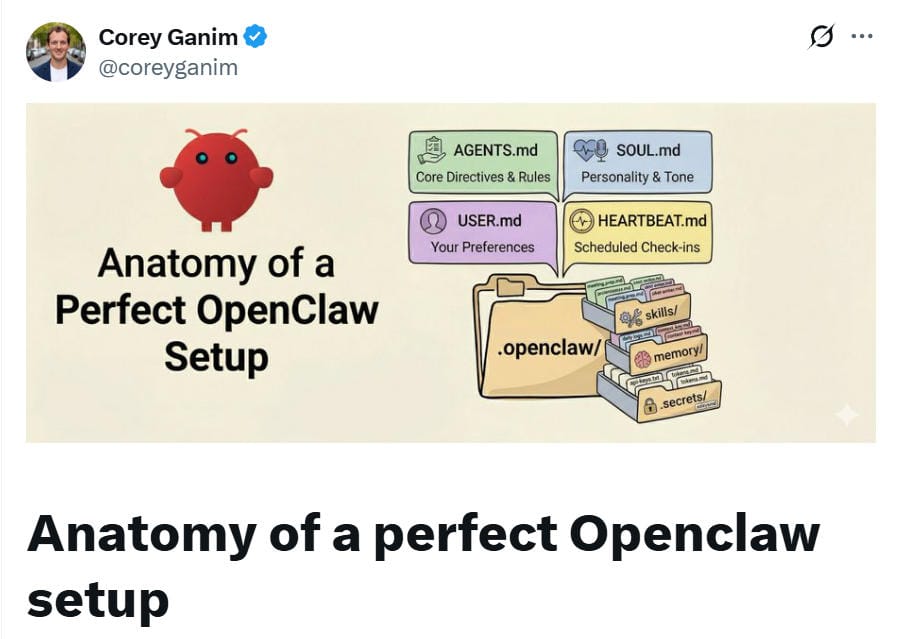
TL;DR: A developer outlined how to properly structure an OpenClaw workspace, arguing most users miss its true control layer. He breaks down key files like AGENTS.md for core instructions, SOUL.md for personality, skills for reusable workflows, and memory for persistent context. The guide shows that a well-organized workspace—not just models—determines how effectively an agent performs and scales.
Open vs Closed Models Debate
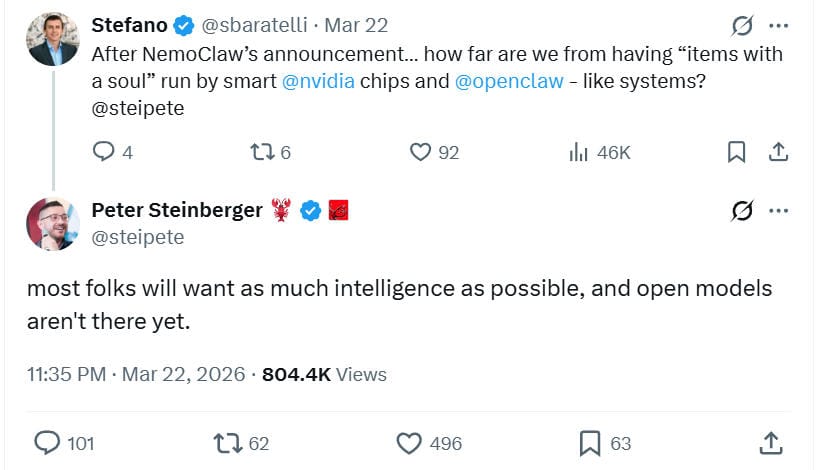
TL;DR: A discussion sparked by Peter Steinberger’s comment that open models “aren’t there yet” triggered immediate backlash across the AI community. Critics framed it as a post-OpenAI shift, while defenders of open models pointed to the speed of releases and the fact that many use cases are already covered.
But the argument ultimately revealed a more uncomfortable consensus: shipping fast is not the same as matching frontier intelligence. Models like GLM, MiniMax, and Kimi may be improving quickly, yet they still trail Claude Sonnet 4.5 even in pre-defined tasks designed to reduce uncertainty. That matters, because if open models cannot win in controlled setups, they are even less likely to outperform in open-ended production environments.
The real divide is becoming clearer that open models are closing distribution gaps, not capability gaps, while closed labs continue to pull further ahead.
Viral OpenClaw AI Company
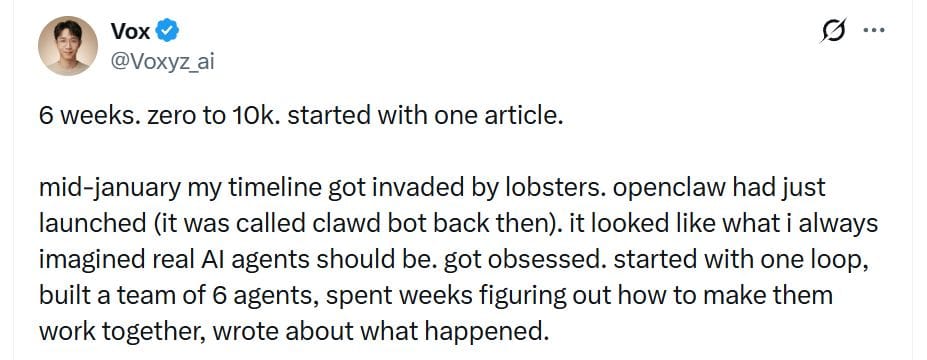
TL;DR: Vox shared how building a six-agent autonomous AI “company” with OpenClaw, Vercel, and Supabase reached a closed-loop system that runs a website end-to-end without human input. The post, detailing execution, feedback, and system fixes, quickly went viral on X, gaining massive attention and helping the author grow by over 10,000 followers.
Jensen Huang Says AGI Now
TL;DR: On Lex Fridman’s podcast, Nvidia CEO Jensen Huang said “we’ve achieved AGI,” pointing to systems like OpenClaw as evidence that AI agents can already perform complex, real-world tasks. He linked AGI to autonomous agents running workflows and creating products, but then tempered expectations, noting most agents lack durability and are far from building companies at Nvidia’s scale.
Cisco Launches Agent Security Stack

TL;DR: Cisco introduced new AI agent security features at RSAC 2026 and launched DefenseClaw, an open-source tool built on Nvidia’s OpenShell to secure agents like OpenClaw. The updates let companies register agents, control tool access, and monitor behavior, while DefenseClaw scans MCP tools, plugins, and workflows for vulnerabilities, helping detect risks and block unsafe components.
Run OpenClaw on MyClaw.ai - No setup, No tech skills, Always-on 👇