🦞 OpenClaw Instances Widely Exposed

Good Morning, OpenClaw Owners!
Exposed instances sit on the open internet like unlocked doors — proof that power without isolation is liability.
OpenClaw Instances Widely Exposed
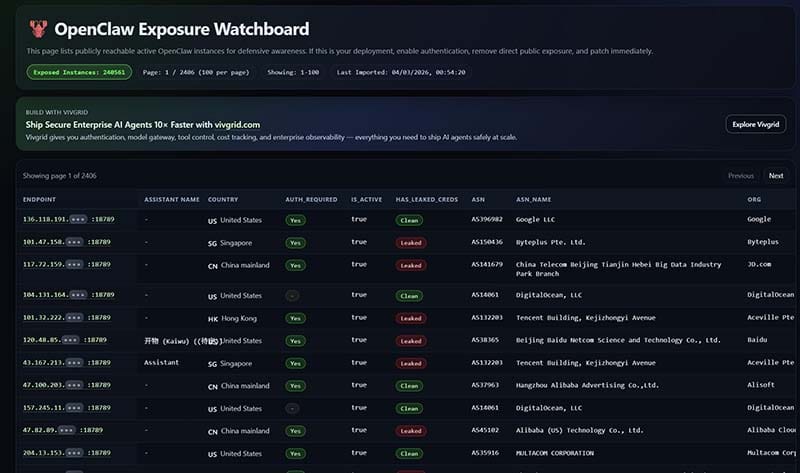
TL;DR: A website recently began cataloging OpenClaw instances that are publicly accessible on the internet, prompting Chinese blogger ruanyf to warn users to review their deployments. Security researchers have already identified over 17,500 exposed OpenClaw instances across 52 countries, many of them running with open ports or weak authentication.
Since OpenClaw agents can operate autonomously with system permissions, API keys, and persistent memory, publicly reachable deployments create a significant attack surface for credential theft or full system takeover.
From the beginning, MyClaw.ai has prioritized user privacy and security, providing each instance with its own dedicated server and protecting access with encrypted, token-based authentication.
MyClaw Backup Skill Launches for the OpenClaw Safety
TL;DR: With hundreds of thousands of OpenClaw instances exposed online, security is becoming a serious concern. As the MyClaw.ai team, we want to contribute practical security tools back to the ecosystem.
We released MyClaw Backup, a security-first snapshot tool for OpenClaw that packages configs, agent memory, skills, credentials, channels, sessions, cron jobs, and daemon scripts into a single .tar.gz archive for reliable backup and recovery.
It supports on-demand backups, token-protected restore and browser access, and scheduled cron backups, making migration and disaster recovery much easier. Archives are permission-locked (chmod 600) and may contain sensitive keys, so verification and proper access control are essential.
The MyClaw Backup skill is now available on ClawHub, and we hope it helps the OpenClaw community run agents more safely.
OpenClaw Gains Spatial Awareness
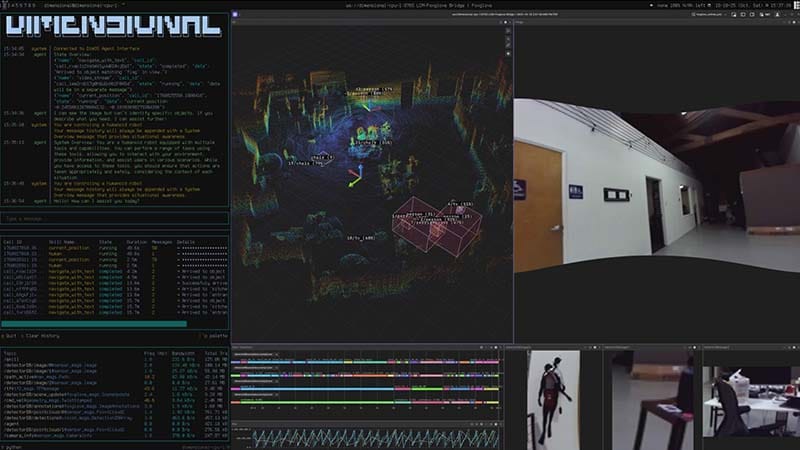
TL;DR: Developer stash announced that OpenClaw can now process physical space and time, integrating lidar, stereo, and RGB sensors in a fully open-source stack. Demonstrated on a Unitree G1 humanoid, the update introduces “Spatial Agent Memory” and “SpatialRAG,” tagging each voxel with vector embeddings and semantic metadata. This enables agents to reason over objects, rooms, geometry, and temporal events—moving beyond text-based RAG into real-world robotics perception.
Isolation Isn’t Optional
TL;DR: In a TFTC episode, Maple AI co-founder Mark Zuman warns that tools like OpenClaw often get full system access, comparing them to voluntarily installed “viruses.” He urges users to isolate agents on VPS or separate machines and also avoid blindly feeding data to OpenAI or Anthropic.
Agents Buy Their Own Data
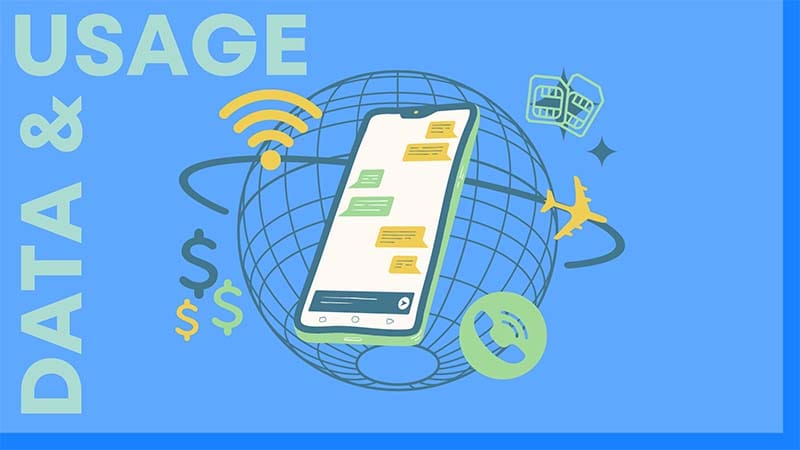
TL;DR: eSIMPal introduced an OpenClaw-compatible API that lets AI agents programmatically buy and manage mobile eSIM data plans. Through a structured “agent skill” integration, agents can list plans, create orders, trigger payments, activate profiles, and deliver QR codes or install links to users. The system enforces confirmation gates for purchases, enabling agents to operate telecom services while keeping billing actions human-approved.
OpenClaw London Meetup Announced
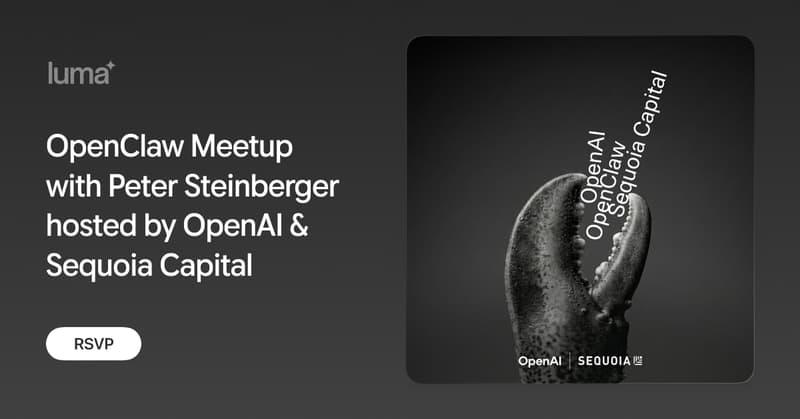
TL;DR: An OpenClaw meetup will take place this Friday in London, organized by Peter Steinberger with support from OpenAI and Sequoia. The event is open to builders, investors, and anyone interested in the OpenClaw ecosystem, but attendance requires applying in advance due to limited space. Organizers say the goal is to bring the growing agent community together for discussion and experimentation.
Build Your Own Mission Control
TL;DR: In a YouTube tutorial, Alex Finn shows how OpenClaw users can create a custom “Mission Control” dashboard using simple prompts, no coding required. He walks through building a Next.js interface with tools like a live task board, scheduled cron calendar, project tracker, memory and document hubs, team structure view, and even a playful 2D office.
OpenClaw’s Startup Economy Emerges
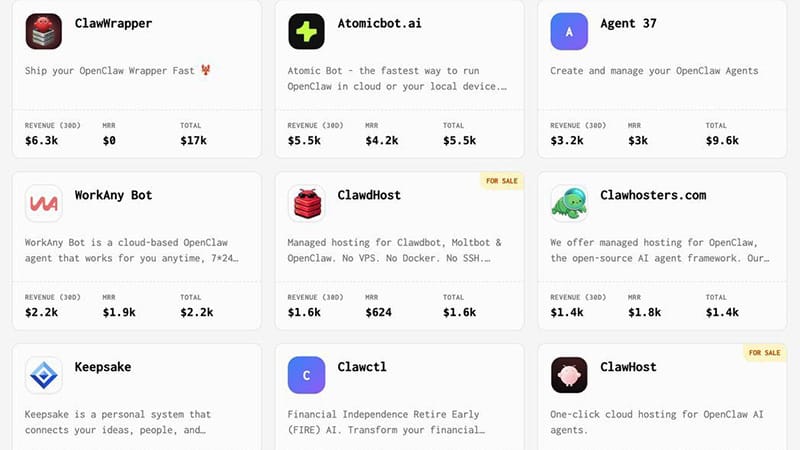
TL;DR: A user posts that OpenClaw has sparked a new micro-startup economy, citing 125 startups tracked on TrustMRR that generated over $274,000 in the past 30 days. Supporters say AI agents now let solo founders run operations once requiring full teams, while skeptics argue revenue is a short-term metric and long-term survival will depend on building durable infrastructure beyond simple API wrappers.
OpenClaw Hits 1,000 Contributors

TL;DR: Peter Steinberger celebrated OpenClaw surpassing 1,000 contributors, calling it another major milestone. The repository now totals roughly 400,000 lines of code and 200,000 lines of tests.
Run OpenClaw on MyClaw.ai - No setup, No tech skills, Always-on 👇