🦞 OpenClaw Foundation Starts Hiring
Plus: Task Flow Backs, X Growth System Breaks Down

Good Morning, OpenClaw Owners!
OpenClaw keeps building, and the OpenAI acquisition rumor just collapsed on its own.
NEWS
OpenClaw Foundation Starts Hiring
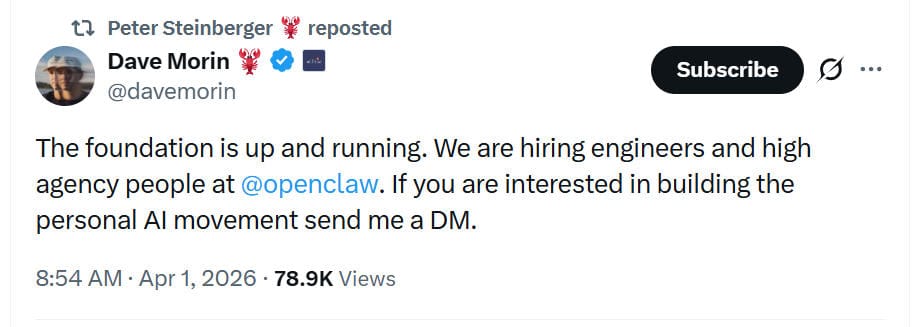
👀 What’s happening: OpenClaw board Dave Morin confirmed that the OpenClaw Foundation is now live and actively hiring engineers and “high agency” contributors, asking interested people to DM him directly. Morin also explicitly confirmed they’re open to all kinds of contributors, not just core maintainers. There’s also early coordination around evaluation pipelines, hinting that onboarding is being systematized rather than handled ad hoc.
🌍 How this hits reality: If you’re using or building on OpenClaw, this means the project is getting more stable from a contributor standpoint — more people working on core issues, faster iteration, and less reliance on a single maintainer. It also clarifies governance: OpenClaw is not quietly becoming someone else’s product, against the recent noise claiming OpenAI has taken control of OpenClaw
🦞 MyClaw Thought: This basically shuts down the narrative that the “OpenAI controls OpenClaw.” Foundations don’t spin up hiring pipelines just to act as someone else’s shell. If anything, this shows OpenClaw doubling down on independence. If you care about where the ecosystem goes, this is the moment to contribute.
UPDATE
OpenClaw 2026.4.2 Brings Back Task Flow
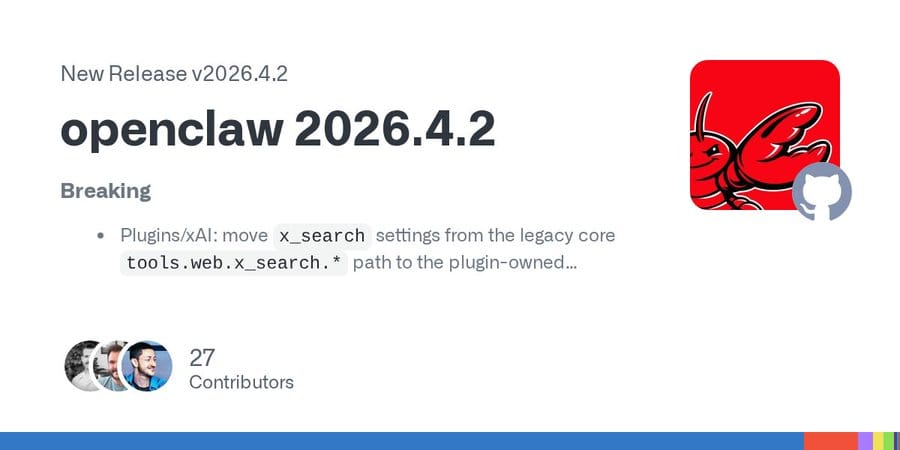
👀 What's happening:OpenClaw just shipped v2026.4.2 and Task Flow is back as the system backbone. This restores durable orchestration with state tracking, revision history, recovery tooling, and managed child task execution. Agents can now run long-lived workflows that survive restarts and can be inspected or resumed.
Highlights from this release:
- 🔄 Durable Task Flow orchestration
- 🔓 Better native exec defaults + approvals
- 🤖 Copilot + Kimi + provider hardening
- 🔌 Tighter plugin activation boundaries
- 🛡️ Hardened provider transport + routing
As context, 2026.4.1 mainly introduced /tasks UI and incremental workflow improvements, but those sat on a still-fragile execution layer. 4.2 fixes that foundation and makes the whole system actually hold together under real workloads.
🌍 How this hits reality: If you’re running anything beyond single-step agents, this is the upgrade that matters. Workflows stop breaking on restarts, background jobs become operable, and multi-step automation becomes something you can trust. But with exec defaults becoming more permissive, bad configs will now fail faster and harder.
🦞 MyClaw Thought: OpenClaw is clearly moving from “agent tool” to “agent OS.” The Task Flow comeback is the real milestone here. But pairing that with reduced execution friction is a trade: more power, less safety by default. If you’re serious about running agents, this is the version where discipline starts to matter.
CASES
OpenClaw X Growth System Breaks Down
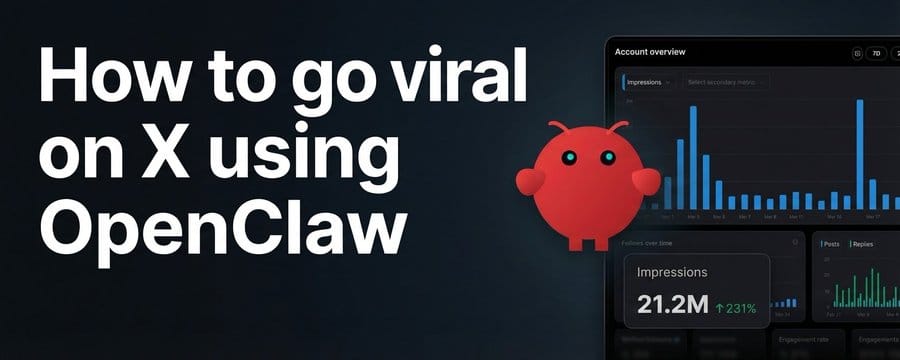
👀 What's happening: A developer outlined a one-agent OpenClaw setup generating 21M monthly views on X, powered by an always-on agent (“Claire”) running on a Mac mini with access to Discord, Gmail, and the browser. The system runs on markdown skills—handling quote tweets, articles, research, and CTAs—where Corey drops links into Discord and gets back structured, high-performing content. His core play is quote tweets that add tactical value, with one example hitting 471K views and 7,600 bookmarks, while the full pipeline turns hours of work into ~10 minutes of input.
🌍 How this hits reality: This turns content from a manual grind into a repeatable system. One operator can now produce 3–5 high-quality posts per day with ~30–45 minutes of effort, while maintaining consistent voice, structure, and output. For anyone running OpenClaw, this is a concrete blueprint: traffic is no longer about “ideas,” it’s about whether your agent stack can research → generate → format → distribute without friction.
🦞 MyClaw Thought: The real key here isn’t “AI writes tweets.” It’s that skills are the product, not the agent. Claire's edge comes from encoding workflows into reusable, compounding markdown files. The opportunity is clear—whoever owns trusted, plug-and-play skill layers will own distribution, not just content.
CASES
Brex CEO Says He’s Running His Life Through OpenClaw
👀 What’s happening: Brex CEO Pedro Franceschi says he’s now running both personal workflows and parts of Brex on OpenClaw, using “virtual employees” with real Slack and email identities to handle recruiting and execution. To make this viable, Brex built a “crab trap” layer that routes agent actions through another LLM for oversight, turning security into an agent-on-agent system. Meanwhile, his personal stack aggregates signals, generates tasks, and even executes actions like bookings—showing OpenClaw as a real operating layer, not a demo.
🌍 How this hits reality: This matters because it shows OpenClaw is moving beyond hobby demos and into executive operations, internal tooling, and agent governance. For anyone running OpenClaw, the takeaway is immediate: the bottleneck is no longer just model quality. It is whether you can wrap agents in enough control, monitoring, and role boundaries to trust them with real work. Brex is effectively saying the path forward is not “wait for perfect models,” but “ship guardrails around imperfect ones and start using them now.” That is a very OpenClaw-native worldview.
🦞 MyClaw Thought: This is the part the market still underrates. The moat is not just who has the smartest model. It is who can turn OpenClaw into a safe operating layer for messy real-world work. That should be a wake-up call.
Run OpenClaw on MyClaw.ai - No setup, No tech skills, Always-on 👇