🦞 Is OpenClaw Walking the Android Path?

Hi, OpenClaw Owners!
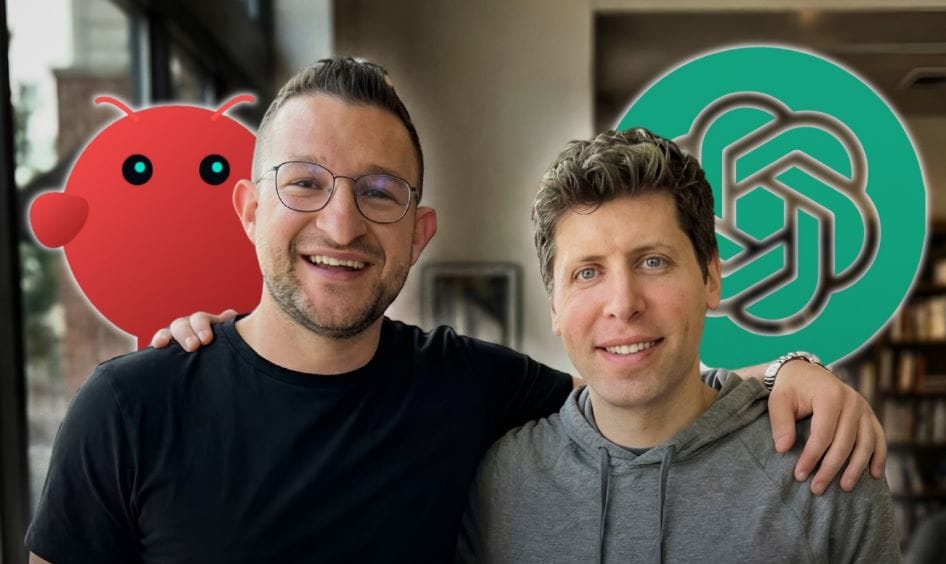
When the news broke that Peter Steinberger, creator of OpenClaw, was joining OpenAI, most conversations focused on ownership, governance, and neutrality. People debated whether the project would remain open, whether standards would shift, and whether influence would consolidate.
From where we sit at MyClaw, the question felt slightly different.
We were less concerned about who owned OpenClaw, and more focused on what it was becoming.
Because from the infrastructure layer, OpenClaw does not look like a framework anymore. It looks like the early surface of an operating system.
Not a device operating system in the traditional sense, but an execution operating system for agents.
And that is where the comparison to Android starts to become relevant.
Before Android Was Android
It is easy to forget that Android did not begin as the global mobile default. In its early years, it was just one of several competing mobile operating systems trying to define how software would run on handheld devices.
Google acquired Android not to sell software licenses, but to ensure that the mobile internet would remain open enough for its services to survive. The system was open-sourced, distributed freely to hardware manufacturers, and rapidly embedded across devices.
From the outside, Android looked decentralized. Any manufacturer could use it. Any developer could build for it.
But over time, the gravitational center formed higher up the stack. Google services, Google Play, and Google accounts became inseparable from the Android experience. The operating system remained open, yet the service layer consolidated value.
Android did not win because it was owned.
It won because it became the execution standard.
What OpenClaw Looks Like From the Hosting Layer
From the perspective of a managed infrastructure provider like MyClaw, OpenClaw already behaves less like software and more like runtime substrate.
When users deploy OpenClaw agents, they are not installing an app. They are standing up an execution environment. Agents maintain memory, operate tools, run workflows, and persist across sessions. They require compute, orchestration, uptime, and security isolation.
That stack looks far closer to cloud infrastructure than to traditional software.
In that sense, OpenClaw resembles the early layers of an agent operating system. The model provides cognition, but the agent framework provides execution. It determines how tasks are scheduled, how tools are invoked, how memory persists, and how actions propagate across systems.
If conversational AI was the interface layer of the last cycle, agent execution layers may define the next one.
That structural shift is why comparisons to Android emerge so naturally.
Where the Paths Converge
Both Android and OpenClaw sit at inflection points where computing interfaces transition.
Android defined how mobile software ran on devices.
Agent frameworks like OpenClaw define how AI executes work across digital environments.
Both operate below the application layer but above raw compute. Both enable ecosystems rather than single products. Both attract developers, tool builders, and platform extensions.
From our vantage point, we already see startups building vertical agents, automation layers, and operational tooling directly on top of OpenClaw. Hosting demand grows not just from experimentation, but from production workflows. Businesses are beginning to treat agents less like demos and more like operators.
This mirrors early Android, when developers stopped treating mobile apps as novelties and started building businesses on top of them.
Where the Paths Diverge
Despite these parallels, the differences are equally important.
Android scaled through hardware distribution. Device manufacturers pre-installed it, creating instant global reach. Control over firmware and OEM partnerships allowed Google to push updates and shape user environments at scale.
OpenClaw has no equivalent hardware layer. Its distribution is developer-native. Agents run on local machines, VPS environments, cloud sandboxes, and managed hosting platforms like ours. Adoption spreads through builders, not manufacturers.
That makes the ecosystem more decentralized and harder for any single entity to control.
Another difference lies in the service layer. Android’s monetization gravity eventually consolidated around app distribution, advertising, and identity systems. OpenClaw’s service layer remains fragmented. Models come from multiple providers. Tool ecosystems are diverse. Execution environments vary widely.
In many ways, OpenClaw today resembles Linux or Kubernetes more than late-stage Android. It is foundational, but its commercial superstructure has not yet consolidated.
The OpenAI Variable
This is where Steinberger’s move to OpenAI becomes strategically significant.
From the infrastructure layer, we do not see this as ownership consolidation. We see it as gravitational repositioning.
When the creator of a runtime standard sits inside the most influential model company in the world, alignment naturally increases. Integration pathways tighten. Interface compatibility deepens. Execution standards may begin to reflect model-native optimizations.
None of this requires formal control.
Standards often evolve through influence long before governance shifts.
For hosting providers like MyClaw, this does not signal restriction. If anything, it signals acceleration. Institutional backing stabilizes ecosystems. Compute sponsorship reduces fragility. Developer confidence increases when foundational frameworks gain visible support.
But it also means the agent execution layer is entering a more strategic phase. One where infrastructure, models, and orchestration stacks begin to co-evolve rather than develop independently.
What This Means for Builders Running Agents
From our vantage point supporting real deployments, the most immediate impact is not political. It is operational.
Users care about uptime, execution reliability, memory persistence, and security isolation. They want agents that run continuously, not frameworks debating governance philosophy.
In that sense, the ecosystem’s maturation benefits them directly. Better funding leads to faster iteration. More institutional attention leads to improved tooling. Production-grade deployments become easier to sustain.
The concerns about openness remain philosophically valid, but practically, most builders will experience forward momentum rather than contraction.
Is an Android Moment Coming for Agents?
The deeper question is whether agent frameworks will reach an “Android moment.”
That would mean a world where:
Agent runtimes become default execution layers.
Developers build plugins and skills around them.
Enterprises deploy workflows on top of them.
Model providers optimize interfaces for them.
If that convergence happens, the framework defining task orchestration could hold influence comparable to what mobile operating systems once held.
OpenClaw has the architectural positioning to move in that direction. Whether it becomes the dominant standard or one of several competing runtimes remains uncertain.
What is clear from the infrastructure layer is that agent execution is no longer experimental. It is becoming operational.
Our Position Inside That Evolution
At MyClaw, we do not see ourselves as observers of this shift. We are participants in it.
Cloud hosting OpenClaw agents at scale means we operate at the boundary between experimentation and production. We see how users actually run agents, where systems fail, what workloads emerge, and how persistent execution changes workflows. We watch the moment an agent moves from demo to dependency, from curiosity to operational layer.
Our mission sits precisely at that transition point. We focus on continuously productizing OpenClaw, turning what was once a developer-heavy framework into something accessible, reliable, and usable for a far broader audience. Lowering the barrier to entry is not just a usability improvement. It is an ecosystem accelerant. The easier it becomes to deploy, run, and scale agents, the faster real adoption compounds beyond the technical early adopters.
From that vantage point, the comparison to Android is not hype. It is structural intuition.
OpenClaw may not follow Android’s exact path. It is more decentralized, more cloud-native, and more entangled with model ecosystems than hardware ecosystems ever were. Its distribution flows through builders and infrastructure layers rather than device manufacturers.
But it is undeniably shaping how AI moves from conversation into action.
And just as Android quietly defined how mobile computing executed software, agent runtimes like OpenClaw may end up defining how AI executes work. The frameworks that make agents persistent, operational, and deployable will shape how intelligence translates into output.
The recent hiring did not close that path.
If anything, it signaled that the race to define it has officially begun.
😁 If you want to skip setup, use MyClaw.ai — It’s literally the easiest way to use OpenClaw — no setup, no tech, plug-and-play, online 24/7. 👇