🦞 Agents Reframe Open Source

Good Morning, OpenClaw Owners!
Agents are quietly rewriting how software is built, how tools are used, and where responsibility begins and ends.
Agents Reframe Open Source

TL;DR: OpenAI board member Bret Taylor argued that coding agents could either erode open source—by letting developers recreate tools on demand—or redefine it through agent-native platforms like OpenClaw. He suggested developers will favor systems built to be extended by agents, especially on stable Linux foundations, focusing on hackable user-space layers rather than complex kernels as AI lowers technical barriers. This direction closely aligns with MyClaw’s approach.
OpenClaw Edits Videos Autonomously
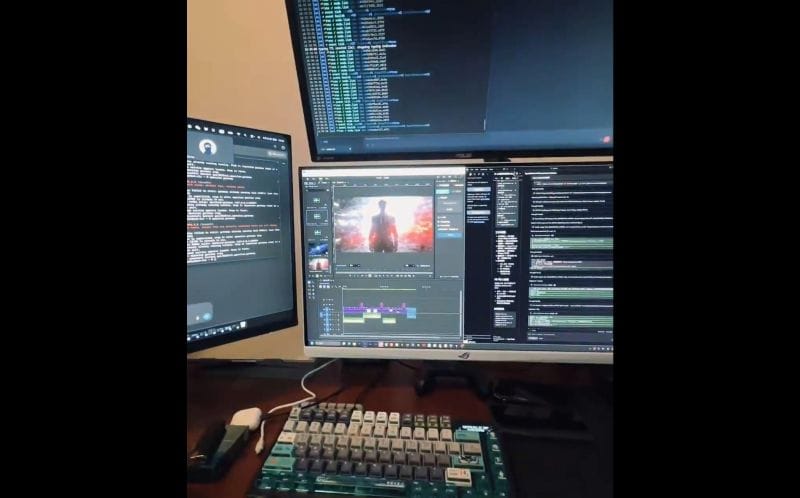
TL;DR: A viral demo showed an automated workflow where OpenClaw first calls Seedance 2 to generate raw video clips, then directly operates Adobe Premiere Pro—importing footage, placing clips on the timeline, and assembling a rough cut. The system completes the full loop from generation to editing without manual intervention, demonstrating a working end-to-end video production setup.
LiteLLM Supply Chain Breach
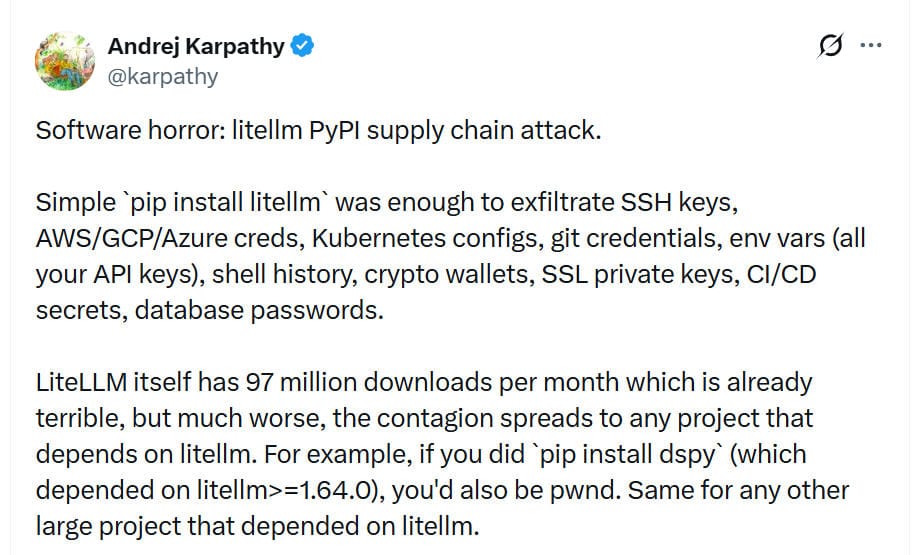
TL;DR: Ai pioneer Andrej Karpathy reported that a compromised LiteLLM version (1.82.8) was briefly published on PyPI, where a simple pip install litellm triggered malware that exfiltrated SSH keys, cloud credentials, API keys, and more. Because LiteLLM is widely used and embedded in dependencies like dspy—and also present in OpenClaw environments—the attack spread downstream. It was live for under an hour before crashes exposed it.
MyClaw Users should immediately run pip show litellm to check their version: 1.82.6 is the last safe release, while 1.82.7 and 1.82.8 should be treated as compromised and all credentials rotated.
OpenClaw Takes Over WhatsApp
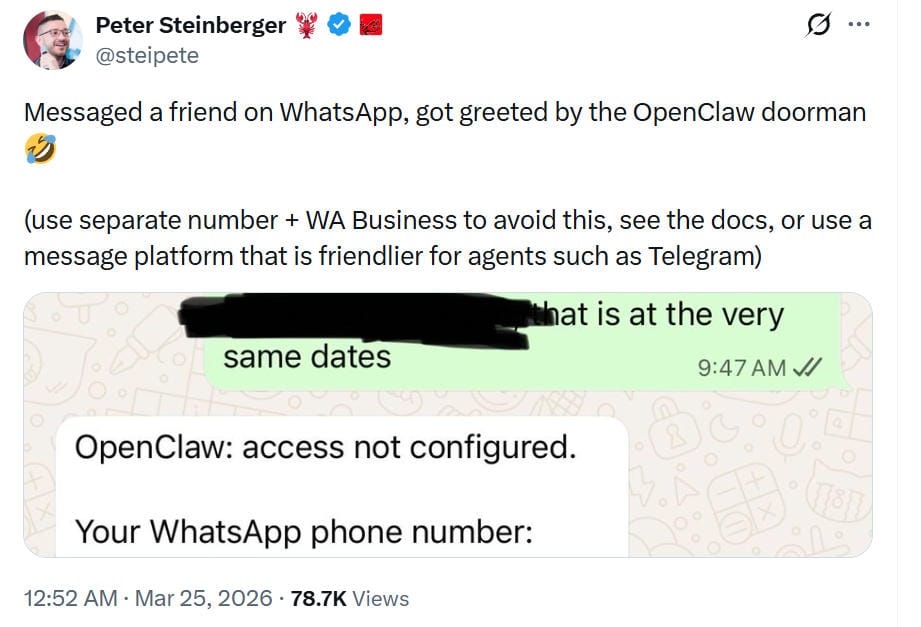
TL;DR: OpenClaw creator Peter Steinberger shared a case where messaging a friend on WhatsApp triggered the friend’s OpenClaw agent to respond as a “doorman,” replying “access not configured” before the human saw it. This happens because OpenClaw integrates via WhatsApp Web API, effectively logging into a personal account and routing all incoming messages through the agent.
He advised separating accounts—using a dedicated number or WhatsApp Business for agent control—or switching to more agent-friendly platforms like Telegram to avoid unintended automated replies.
Codex Bridge Lands in OpenClaw
TL;DR: A demo by Harold Hunt, maintainer of OpenClaw, introduced the OpenClaw Codex App Server, a plugin that connects OpenClaw with Codex across Telegram and Discord. After installation and binding a session, users can send commands, run code, generate plans, and manage projects remotely as if using Codex locally. The system syncs threads, supports approvals for actions, and enables continuous project workflows directly from chat.
User Blames Agent Errors
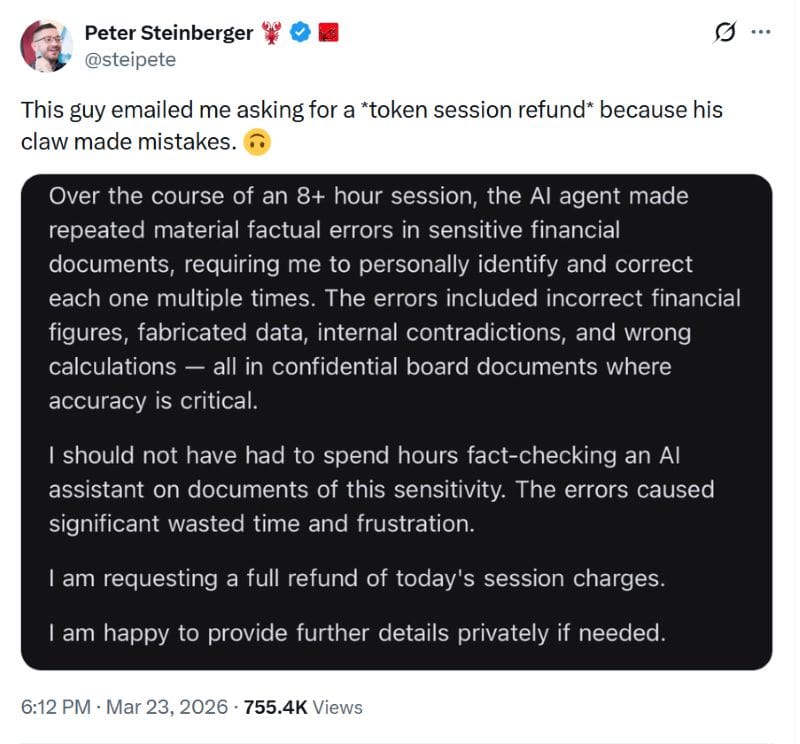
TL;DR: Peter Steinberger shared that a user requested a refund after an 8+ hour session where their OpenClaw agent produced repeated factual errors in sensitive financial documents, including wrong figures and fabricated data requiring manual correction. The user asked for $107 back from their Anthropic bill, but Steinberger declined, joking he refunded “zero,” highlighting a common beginner mistake of confusing OpenClaw’s open-source nature with SaaS-style responsibility for token costs and outcomes.
Run OpenClaw on MyClaw.ai - No setup, No tech skills, Always-on 👇